Political talk »Shaping & Enduring« | December 15, 25
We`re sorry, this content is currently only available in German.


We`re sorry, this content is currently only available in German.
Video: © Pascal Sangl
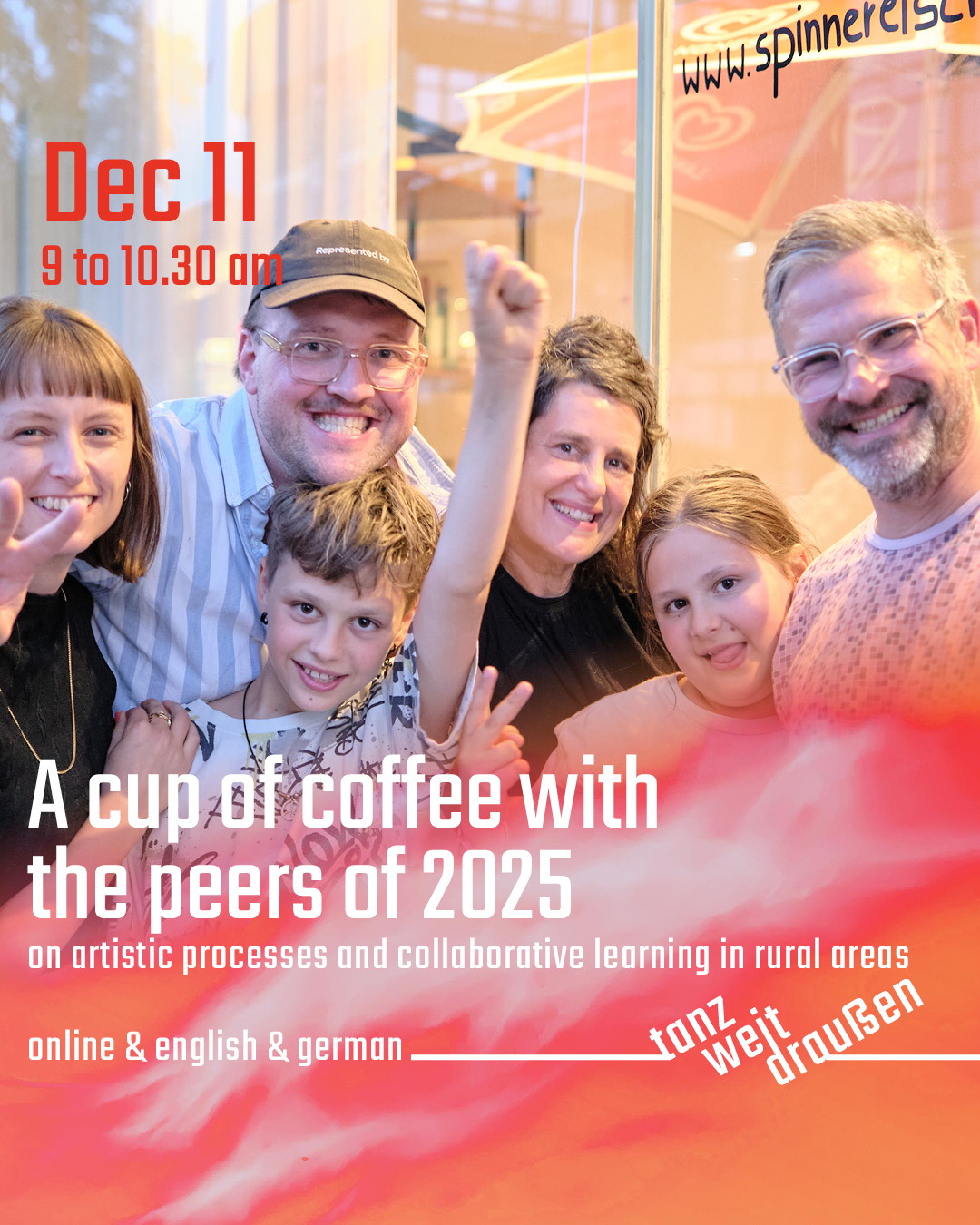
In this Coffee Talk, the three 2025 peer tandems of »tanz weit draußen« — Bianca Kruppa & Kattrin Deufert, Bernardo San Rafael & Jakob Jautz and Lisa von Eichel-Streiber & Sarah Petry — share insights into their collaborative processes and individual artistic work in rural contexts.
The conversation explores how connections are built through dance, how different artistic languages encounter one another, and what possibilities emerge when artistic practice becomes part of everyday life in rural communities. The peers reflect on their experiences, working methods, and the transformations that arise through collaboration and exchange.
Video: © Pascal Sangl
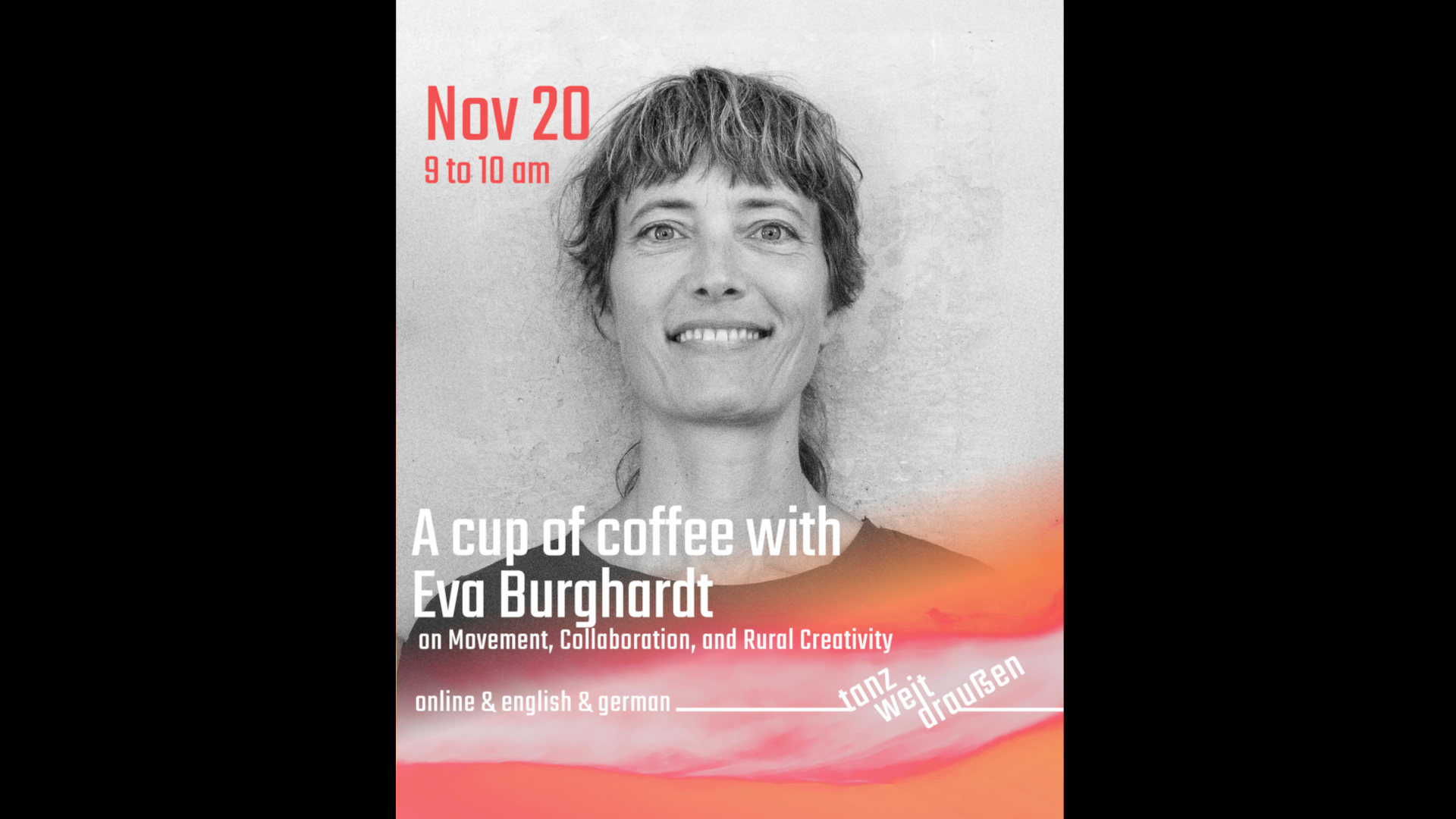
Eva Burghardt is a dancer, choreographer, dance educator, and founder of TANZWERK Werder (established in 2023) — a studio for dance, movement, and therapy, and a hub for community dance projects in the rural region of Brandenburg, near Potsdam.
In this Coffee Talk, Eva shares insights from her work as both a creator of participatory and community-based projects — including the intergenerational project VER_ORTEN/2024, developed with her colleagues from the Sudden Starlings Collective — and as the founder of an interdisciplinary art space in the countryside. She reflects on ideals and pragmatics, successes and setbacks, challenges and motivations — and explore why it still makes sense to keep going.
Video: © Pascal Sangl
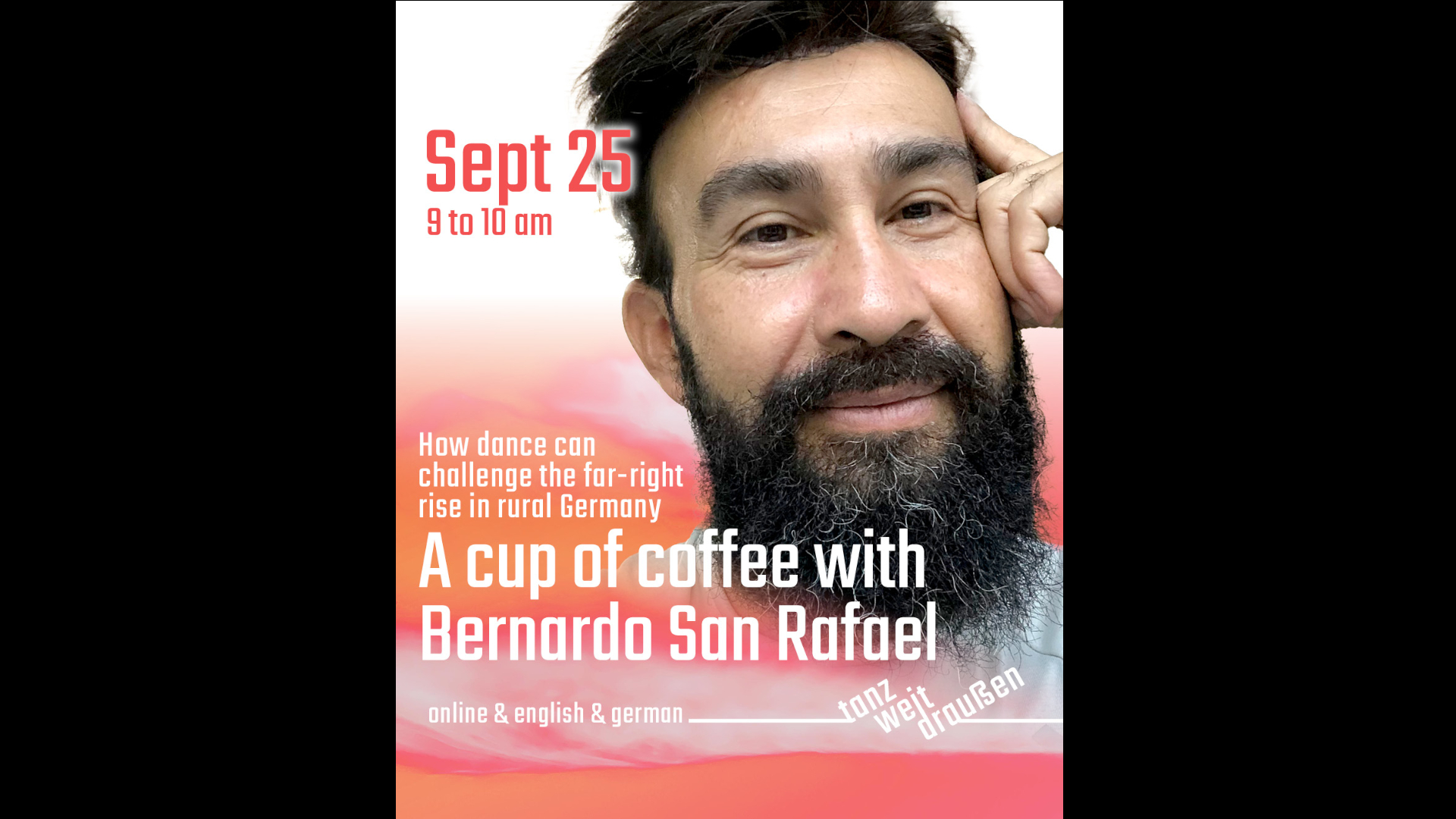
In this talk Bernardo San Rafael discusses his work in the public spaces of Demmin, a town in Mecklenburg-Vorpommern, where he uses dance as a tool to counter the far-right shift in rural Germany. He emphasizes the importance of building strong networks and ensuring the sustainability of cultural projects to create a lasting social impact.
His career includes dancing for major German institutions such as Stadttheater Freiburg, Deutsche Rheinoper Düsseldorf/Duisburg, Theater Dortmund, and Oper Bonn, as well as performing with Angie Hiesl and Roland Kaiser in Cologne. As a teacher, he has led workshops in Istanbul (CATI), Skiathos (ERASMUS), Athens (ECHODRAMA), Freiburg (Bewegungsart), and Düsseldorf (Tanzhaus NRW). He has also collaborated with Plöger/Winkler/Becker in Düsseldorf and joined the Stuttgart-based theater company Lokstoff.
Today, Bernardo focuses on creating his own performances in non-theatrical settings, aiming to guarantee accessibility to the art of dance and foster dialogue in communities beyond traditional cultural venues. Learn more in Bernardo`s talk!
We`re sorry, this content is currently only available in German.
Video: © Pascal Sangl
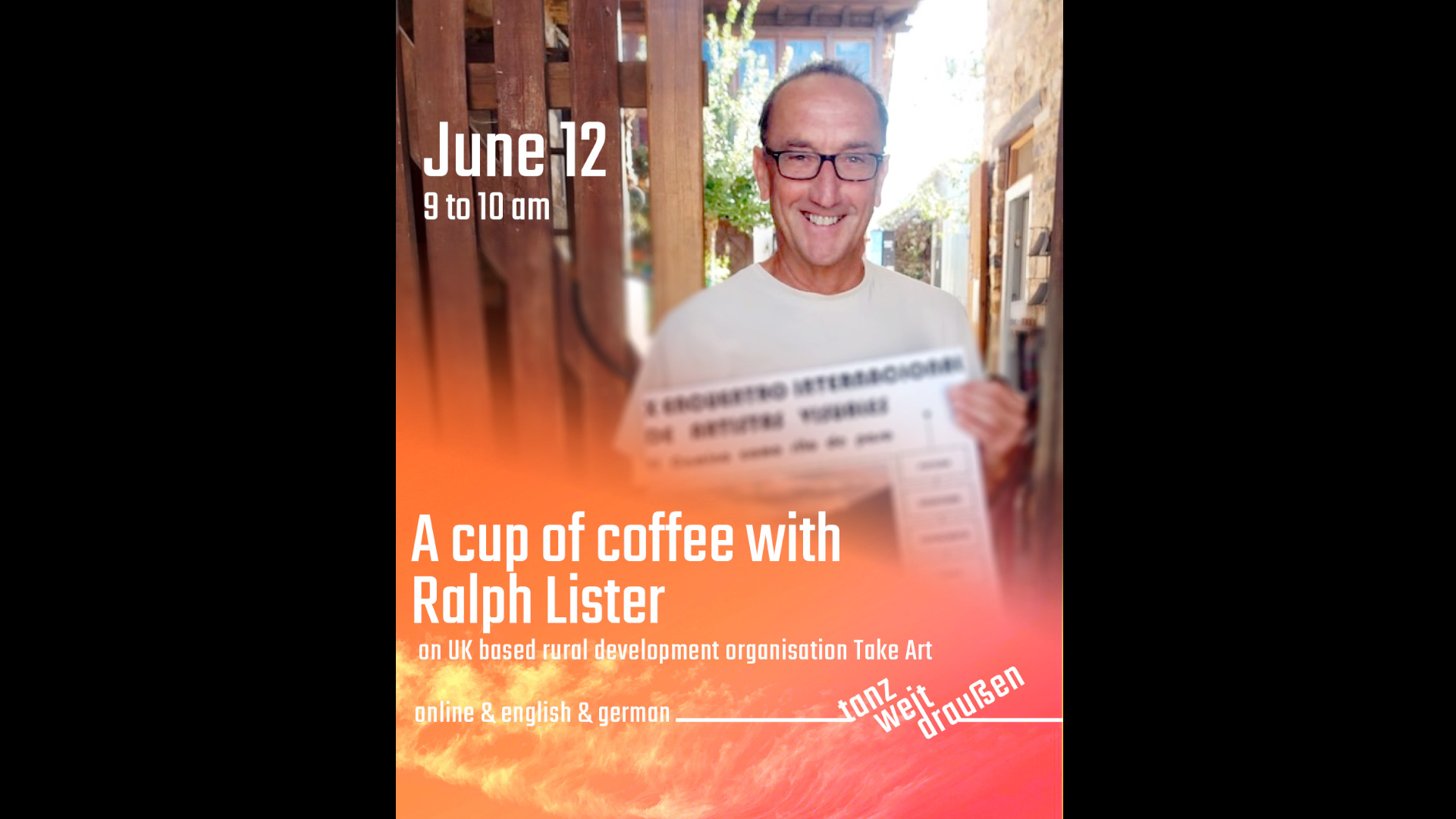
Ralph Lister has led »Take Art«, a UK-based rural development organisation with a specialism in rural touring, for 30 years. »Take Art« is a non-building-based arts development organisation located on a farm in rural southwest England. It is funded by »Arts Council England« (ACE) and has an annual turnover of approximately €650,000. He led the first »SPARSE« project from 2018 to 2021 and also oversaw »Take Art’s« involvement in Ruritage, a Horizon-funded rural regeneration project from 2018 to 2022, in which its rural touring programme served as a model. He co-led the first »Perform Europe« project and was a founding member of the National Rural Touring Forum, representing UK rural touring schemes. Through »Take Art«, he also carries out advocacy, research, and evaluation functions for »SPARSE Plus«, contracted by the lead Italian performing arts partner, »AMAT«, based in the Marche Region.
In his talk, Ralph shares the story of building »Take Art«, its activities, and its importance to the Somerset region in southwest England, as well as his role in the EU project »SPARSE Plus« and its invaluable research insights on dance in rural areas.
»SPARSE Plus« is presented (by Bêbê de Soares) in another one of our Coffee Talks.
Video: © Pascal Sangl
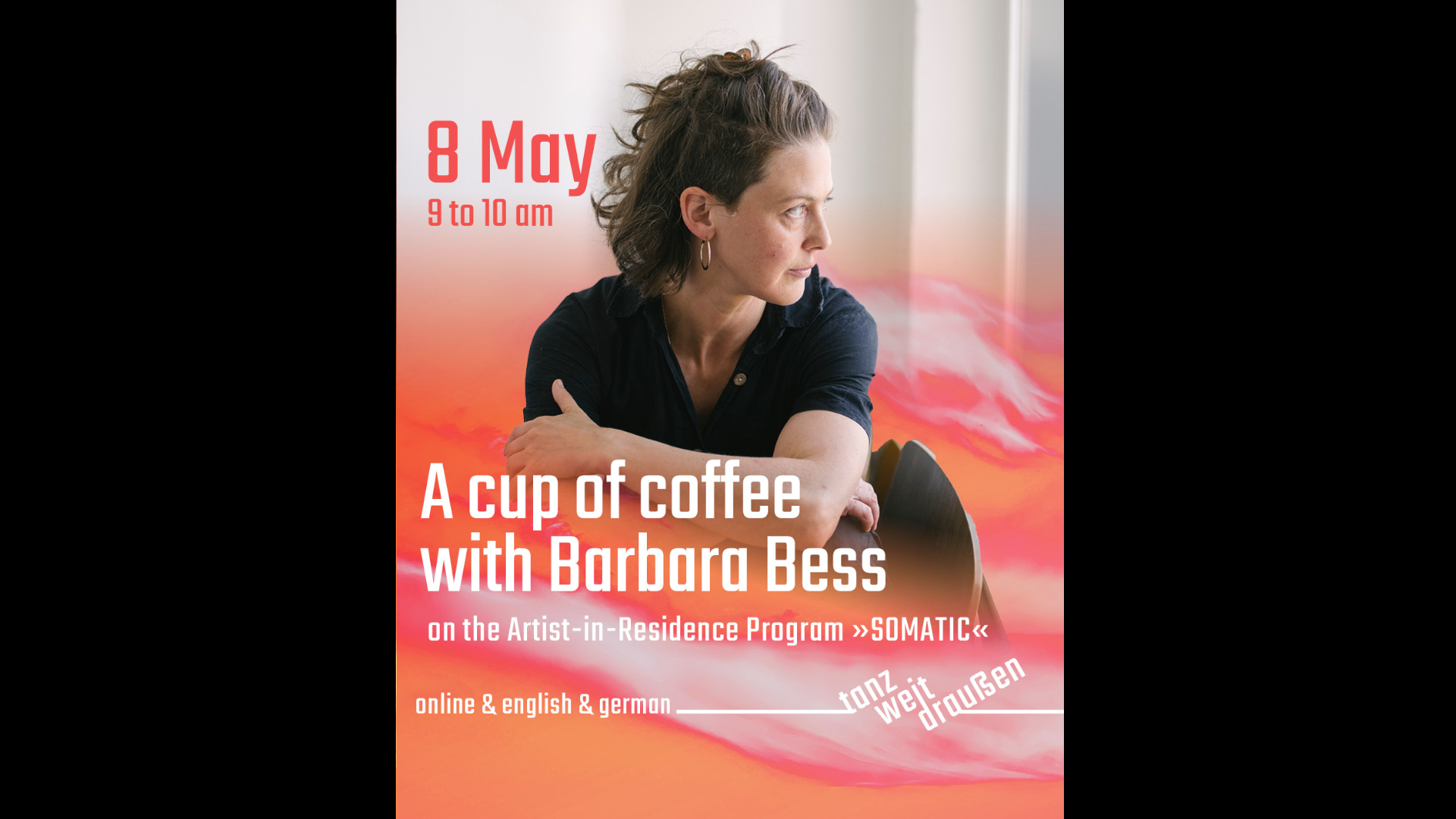
Barbara Bess is a choreographer, dancer, and curator whose work explores the intersection of urban and rural spatial cultures. Since 2021, she has been developing the »SOMATIC« Artist-in-Residence Program for Movement Research at a former village school in the Bavarian region of Middle Franconia.
The »Alte Schule« (Old School) serves as a dynamic research platform, providing artists from various disciplines the opportunity to realize projects, collaborate, and exchange ideas. It fosters sustainable modes of artistic production while facilitating knowledge generation through collective engagement. The program welcomes performers, visual artists, dancers, multimedia artists, sculptors, and more.
Built around 1900 as a brick villa, the »Alte Schule« is located on the outskirts of Kirchfembach, a quiet village near Nuremberg, surrounded by serene yet inspiring landscapes. The surrounding fields, meadows, and fallow lands create a rich environment for outdoor research and site-specific performances.
Learn more about »SOMATIC« and the potential of artistic practice in the rural settings in Mittelfranken Barbara`s talk.
Video: © Pascal Sangl
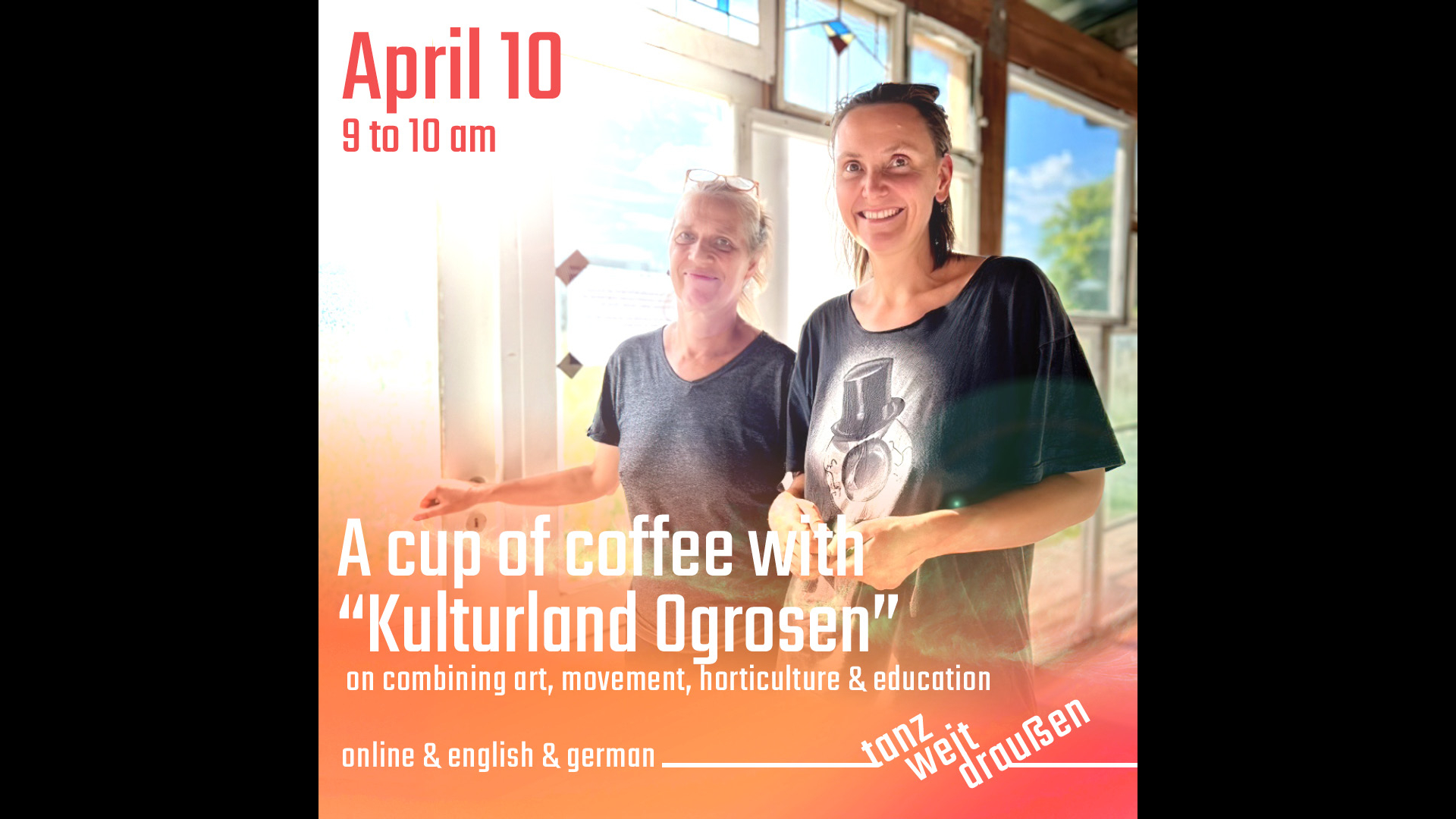
Nadja Raszewski / choreographer and dance educator and Daniela Grosset / cultural manager and theater teacher have realized many artistic dance productions and socio-cultural projects in a variety of contexts in recent years, in Berlin, Germany and internationally. Their work involves a community art spirit and is always about participation and co-creation of the participants. Autobiographically motivated they have founded the »Kollektiv Kulturland Ogrosen« in 2019 as a response of their desire to expand their field of action into rural areas. Their local activities cover both cultural and educational aspects. They now live on the site of a former pig farm in Ogrosen / Niederlausitz organizing art events in the form of residencies, workshops and performances, and growing flowers as members of the slowflower movement (https://www.slowflower-movement.de/). Various dance productions have already been developed and shown in the expanded dance studios.
“Culture in rural areas should not remain unattainable as an elitist dimension, but rather it should be experienced by everyone.” By combining art, movement, horticulture and education Kulturland Ogrosen offers a wide range of cultural activities to the local community and warmly invites people to experience them. This is what we talk about in this conversation.
Video: © Pascal Sangl
The initial »SPARSE« project has established rural touring networks in four European countries from 2018 to 2021. The current »SPARSE Plus« project running from 2023 to 2027 involves 11 partners from 9 European countries and will result in cross-border touring with the Czech Republic, Estonia, Germany, Hungary, Italy, Lithuania, Poland, Romania and Sweden. This project is funded as a medium scale Creative Europe Co-operation and it involves the following partners: Associazione Marchigiana Attività Teatrali (Marche, Italy) as Coordinator with SA Eesti Tantsuagentuur (Estonia), Artists Group Fish Eye (Lithuania), Shoshin Theatre (Transylvania, Romania), Riksteatern Varmland (Varmland Sweden); with new partners Pro Progressione (Hungary), SINUM (Hungary), Nova Sit (Czech Republic), Teatro 4Garoupas (Germany), Art Fraction Foundation (Poland) and Fondazione Toscana Spettacolo (Tuscany, Italy).
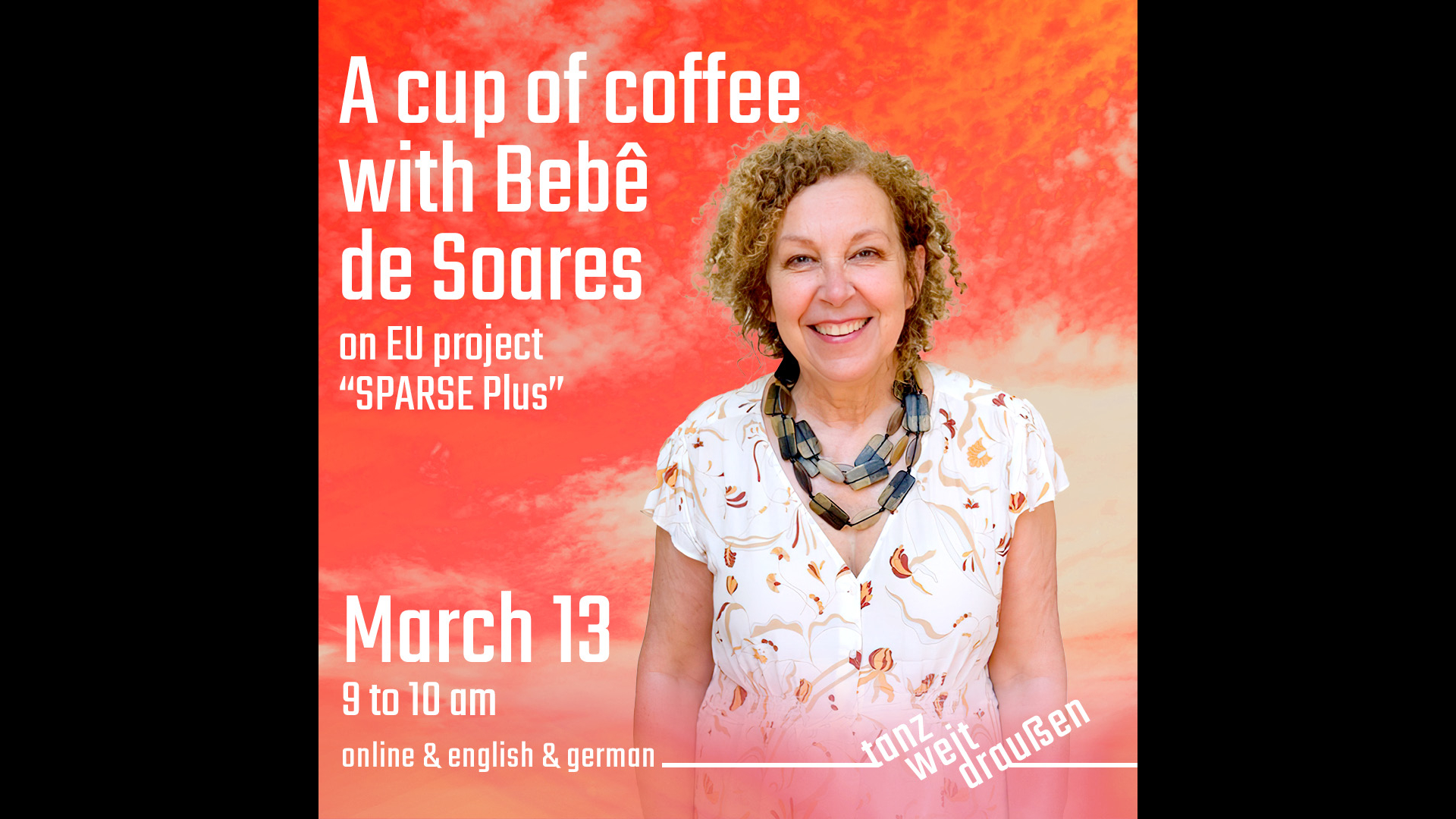
Bebê de Soares is the artistic director of the German SPARSE Plus partner »Teatro 4Garoupas«, located around Cologne. She is a board member of »ASSITEJ« International. Since 2019 she is back in Germany after 8 years in Chile, where she is producer and organizer of tours, residencies and collaborations on a European level, such as »PERFORM EUROPE« and »SPARSE Plus«.
In her talk Bebê de Soares gives an insight on her work within the international rural touring network.
www.sparse.eu / www.facebook.com/SPARSEU/ www.instagram.com/sparseproject/

In the final Coffee Talk of the year we look back together at our »Tanz Nordwärts« Touring that took place in November 2024 across three northern federal states of Germany. We report on reaching audiences with our mobile dance productions in exciting locations such as the »Zukunftsschloss« Gadebusch, the Kulturkirche Brügge, and several schools within the area. Secondly, we want to point your attention to our »map.weit.draußen«, an interactive mapping tool designed to illustrate where and how dance in rural areas is active. Last but not least, we celebrate the release of our Coffee Talk archive. It offers a chance to rewatch the previous talks or share then with friends and colleagues.
In a relaxed get-together, this Coffee Talk offers insights, exchange, reflections on the format, and time for participants’ remaining questions.